Tsunami and Earthquake Training for New Zealand Workplaces
Prepare your team to respond decisively to seismic events and tsunami warnings. NEMA-aligned training delivered at your New Zealand workplace.
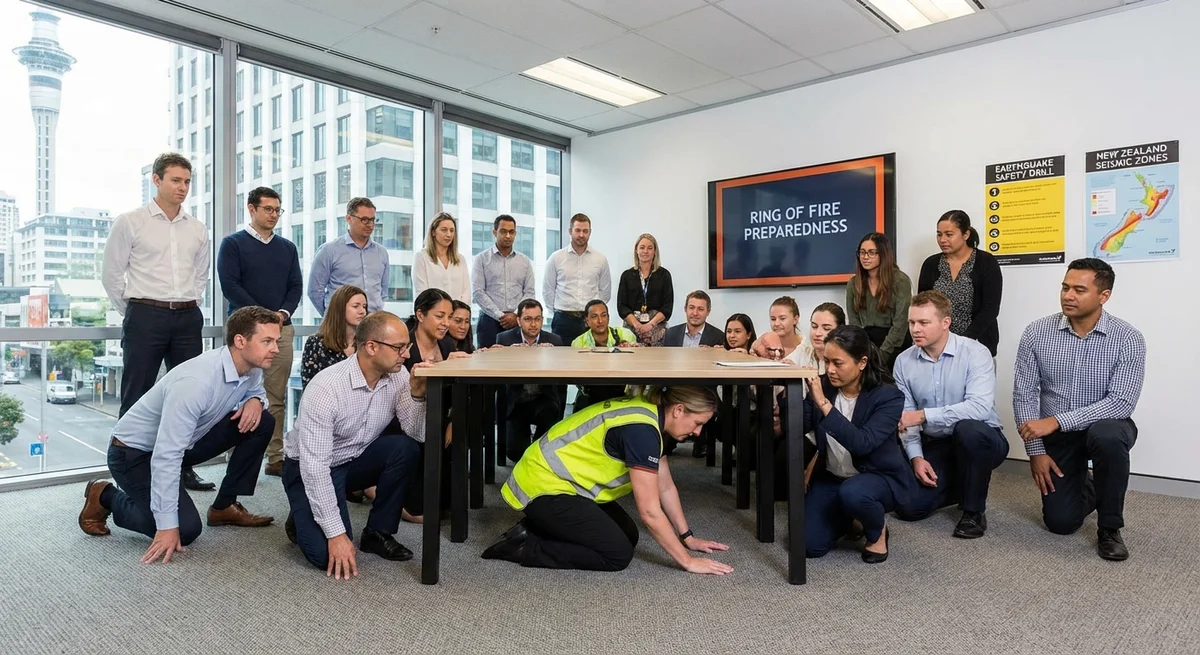
Every New Zealand workplace must prepare for seismic emergencies not as a remote possibility, but as a likely occurrence during the working lives of your staff. When earthquakes occur, your people need to know exactly what to do.
Messana Group's Tsunami & Earthquake Training transforms uncertainty into prepared, confident action. We deliver practical, NEMA-aligned training at your workplace.
What Your Team Will Learn
- Execute Drop, Cover, Hold instinctively under stress
- Make critical decisions during seismic events
- Assess building damage and recognise instability signs
- Understand aftershock patterns and maintain readiness
- Recognise official and natural tsunami warning signs
- Execute tsunami evacuation procedures confidently
- Integrate seismic response into your Emergency Management Plans
- Coordinate with NEMA guidelines and civil defence
Hazard Types Covered
Earthquake
Drop, Cover, Hold technique, shelter-in-place decisions, and immediate aftermath response for seismic events.
Tsunami
Warning systems, vertical and horizontal evacuation, and long-duration event management for coastal workplaces.
Aftershocks
Understanding aftershock patterns, cumulative damage assessment, and safe reoccupation decisions.
Who Should Attend
Course Outline
Six comprehensive modules covering everything your team needs to respond confidently to seismic events and tsunami warnings.
- • Understanding New Zealand's position on the Pacific Ring of Fire
- • Tectonic plate boundaries and earthquake likelihood
- • Historical seismic events and lessons learned
- • Auckland Volcanic Field awareness for Auckland workplaces
In-House Training Delivery
We come to you. All tsunami and earthquake training is delivered on-site at your New Zealand workplace, so your team trains in the environment they'll actually respond in.
Your Location
Training at your workplace across New Zealand
Flexible Scheduling
Sessions tailored to your team's availability
Customised Content
Specific to your building layout, procedures, and evacuation routes
What's included with in-house delivery:
- Training delivered at your workplace — no travel required
- Content customised to your building and seismic zone
- Flexible scheduling
- Groups sized for interactive participation
- Practical Drop, Cover, Hold exercises in your actual workspace
- Attendance registers and reports provided
Ready to Prepare Your Team for Seismic Events?
Don't wait for an earthquake to discover your team isn't prepared. Messana Group's practical, NEMA-aligned training gives them the skills and confidence to protect themselves and their colleagues.
or email fire@messana.com.au
What Participants Say
Feedback from training participants across Australia and New Zealand.
"Practicing the evacuation drill gave me confidence in my ability to respond to a fire emergency."Tina Nguyen
"I found the step-by-step instructions on using fire extinguishers particularly useful."Winning Chung
"Great place to train. Trainers are well-informed and up-to-date with all the new tech used."Sarah Mahfoud
Compliance Included
Attendance registers and reports provided
Customised Training
Tailored to your workplace
Post-Training Support
Ongoing guidance for new wardens
Renewal Reminders
We track your certification dates
Related Courses & Services
Strengthen your overall emergency preparedness with our full range of services.
| Course | Category | Duration | Compliance | Action |
|---|---|---|---|---|
| Chief Warden Training | Training | 2 hours | Yes | View Course |
| Fire Warden Training | Training | 2 hours | Yes | View Course |
| Fire Extinguisher Training | Training | 2 hours | Yes | View Course |
| General and First Response Training | Training | 2 hours | Yes | View Course |
| Annual Compliance Programs | Planning & Compliance | Varies | — | View Service |
| Active Armed Offender Planning and Response Training | Training | 3 Hours | Yes | View Course |
| Emergency Management Plans | Planning & Compliance | Varies | — | View Service |
| Business Continuity Planning | Planning & Compliance | Varies | — | View Service |
| Evacuation Diagrams and Safety Signs | Planning & Compliance | Varies | — | View Service |
| Evacuation Exercises | Planning & Compliance | Varies | — | View Service |
| Post Incident Recovery Support | Planning & Compliance | Varies | — | View Service |
| Lockdown Plans | Specialist Service | Varies | — | View Service |
Chief Warden Training
Fire Warden Training
Fire Extinguisher Training
General and First Response Training
Annual Compliance Programs
Active Armed Offender Planning and Response Training
Emergency Management Plans
Business Continuity Planning
Evacuation Diagrams and Safety Signs
Evacuation Exercises
Post Incident Recovery Support
Lockdown Plans
Protect Your People from Seismic Risks
New Zealand's seismic environment demands prepared, confident staff. Let Messana Group build your team's earthquake and tsunami response capability with training that saves lives.
or email fire@messana.com.au