Post Incident Recovery Support for Your Workforce
Comprehensive support for your organisation and staff following emergencies and critical incidents.
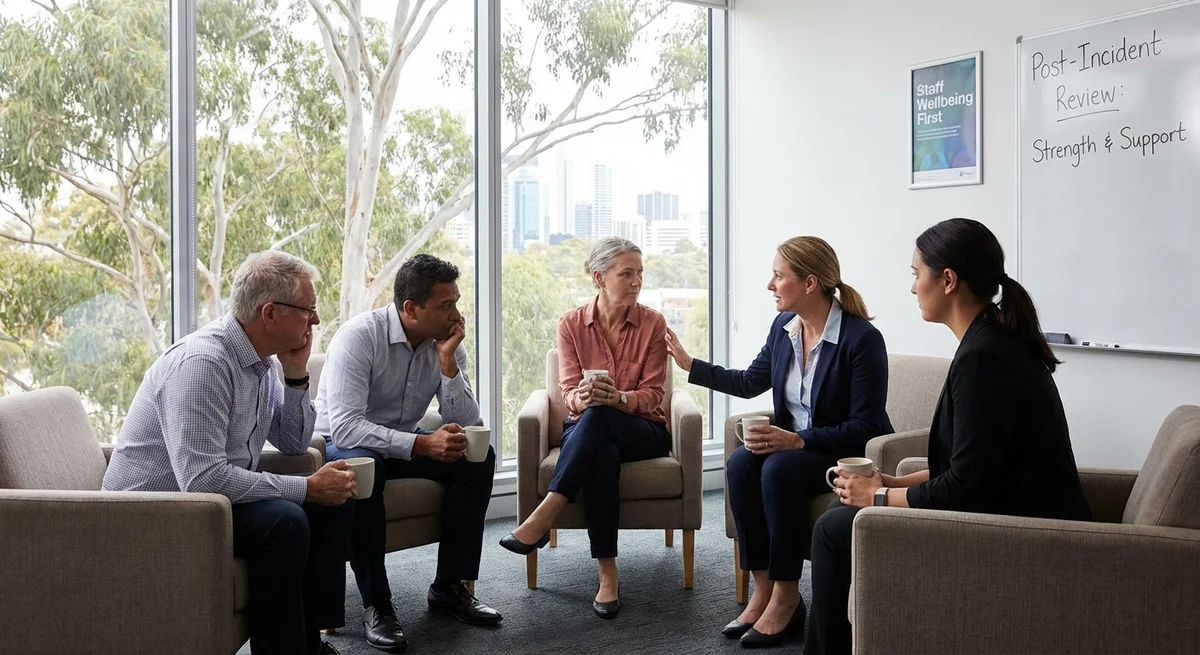
After the Emergency Ends
When the immediate threat has passed and emergency services have departed, your organisation faces a different challenge: recovery. Staff may be shaken. The workplace may be disrupted. Normal operations cannot simply resume as if nothing happened.
The period following a critical incident is crucial for your organisation’s long-term wellbeing. How you support your staff, document the incident, and learn from the experience shapes both recovery and future preparedness.
Messana Group provides structured post-incident recovery support to help organisations navigate the aftermath of emergencies with professionalism and care.
Critical Incident Debriefing
What Is Critical Incident Debriefing?
Critical incident debriefing is a structured process for reviewing what occurred during an emergency. Unlike informal discussions, professional debriefing follows established protocols to:
- Establish a factual timeline of events
- Allow participants to share their experiences
- Identify what worked well and what could improve
- Begin the psychological processing of stressful events
- Document lessons learned for future reference
Our Debriefing Approach
We facilitate debriefing sessions using evidence-based methodology:
Safe Environment: We create a supportive setting where staff can discuss their experiences without judgement or blame.
Structured Process: Our facilitators guide participants through a systematic review of events, ensuring comprehensive coverage while managing emotional intensity.
Multiple Perspectives: We gather input from participants at all levels and roles, building a complete picture of the incident and response.
Action Focus: We translate observations into actionable recommendations for improving future response capability.
Debriefing Timing
The optimal timing for debriefing depends on the incident severity and participant readiness:
Operational Debrief: Within 24-72 hours of the incident, focusing on factual review and immediate lessons.
Psychological Debrief: Typically 48 hours to two weeks after the incident, when participants have had time to process initial emotions but the experience remains fresh.
Formal Review: Comprehensive incident review involving leadership, typically conducted within 30 days of the incident.
Staff Welfare and Psychological Support
Recognising Impact
Critical incidents affect people differently. Some staff may show immediate distress; others may experience delayed reactions days or weeks later. Our support includes helping management recognise signs that staff may need additional assistance:
- Changes in behaviour or performance
- Physical symptoms of stress
- Avoidance of workplace areas or tasks
- Heightened anxiety or vigilance
- Withdrawal from colleagues
Support Resources
We assist organisations in connecting staff with appropriate support:
Employee Assistance Programs: We can help coordinate with your EAP provider or recommend services if you don’t have an existing arrangement.
Peer Support Networks: Training for designated staff members to provide informal support to colleagues.
Professional Referrals: Guidance on when and how to refer staff to mental health professionals.
Management Guidance: Coaching for managers on supporting affected team members while maintaining operational requirements.
Supporting Wardens and First Responders
Staff who served as emergency wardens or provided first response often carry additional burden. They made decisions under pressure, may have witnessed distressing scenes, and might question their actions. We provide specific support for these critical responders:
- Private debriefing sessions for wardens
- Recognition of their contribution
- Processing of difficult decisions or outcomes
- Reinforcement of training adequacy
- Identification of additional support needs
Return to Workplace Procedures
Physical Readiness
Before staff return to an affected workplace, physical conditions must be verified:
Safety Assessment: Confirmation that hazards have been resolved and the space is safe for occupancy.
Cleaning and Restoration: Ensuring the workspace is physically prepared for return, including removal of incident-related debris or damage.
Systems Verification: Confirming that safety systems, communications, and operational equipment are functional.
Psychological Readiness
Returning to a location associated with a traumatic event can be difficult. Our support includes:
Phased Return: Recommendations for gradual return to normal operations when appropriate.
Communication Planning: Scripts and talking points for managers conducting return-to-work briefings.
Workplace Modifications: Advice on temporary adjustments that may ease the transition (lighting, seating arrangements, break area access).
Ongoing Monitoring: Framework for checking in with staff during the return period.
First Day Back Support
We can provide on-site support during the first day back following significant incidents:
- Presence at workplace entry to greet returning staff
- Availability for individual conversations
- Support for managers conducting team briefings
- Observation for staff showing significant distress
Incident Documentation and Investigation
Documentation Standards
Proper incident documentation serves multiple purposes: regulatory compliance, insurance requirements, lessons learned, and potential legal proceedings. We assist with:
Incident Reports: Comprehensive documentation of what occurred, when, and how the organisation responded.
Timeline Reconstruction: Detailed chronology of events based on available evidence and witness accounts.
Photographic Documentation: Guidance on appropriate photographic recording of incident scenes and damage.
Records Preservation: Advice on preserving communications, system logs, and other relevant records.
Investigation Support
For significant incidents requiring formal investigation, we provide:
Investigation Planning: Structured approach to determine scope, methodology, and resource requirements.
Interview Protocols: Professional interview techniques for gathering witness information.
Root Cause Analysis: Systematic examination of contributing factors beyond immediate causes.
Regulatory Coordination: Guidance on working with regulators, inspectors, or investigators.
Lessons Learned Integration
Capturing Learning
Every incident provides learning opportunities. We help organisations capture and apply these lessons:
Debrief Findings: Systematic documentation of observations from debriefing sessions.
Gap Analysis: Identification of where Emergency Management Plans, training, or equipment fell short.
Positive Recognition: Documentation of what worked well and should be reinforced.
Improvement Priorities: Ranked recommendations for enhancing future response capability.
Implementation Support
Lessons learned have value only when implemented. We assist with:
Plan Updates: Revising Emergency Management Plans to incorporate lessons learned.
Training Adjustments: Modifying training content to address identified gaps.
Procedure Refinement: Improving operational procedures based on real-world experience.
Progress Tracking: Framework for monitoring implementation of improvements.
Proactive Recovery Planning
Organisations that plan for recovery before incidents occur recover faster when incidents happen. Our proactive services include:
Recovery Plan Development: Creating documented procedures for post-incident activities before they’re needed.
Support Resource Identification: Establishing relationships with counselling services, EAPs, and other support providers in advance.
Communication Templates: Preparing draft communications for staff, customers, and stakeholders to expedite post-incident messaging.
Training for Managers: Equipping leaders with skills to support their teams through recovery.
When to Engage Post-Incident Support
Consider post-incident recovery support following:
- Fire incidents requiring evacuation
- Medical emergencies resulting in serious injury or death
- Security incidents including threats or violence
- Natural disasters affecting the workplace
- Accidents causing significant harm or damage
- Near-misses that could have resulted in serious harm
- Any incident causing significant staff distress
Earlier engagement typically leads to better outcomes. If you’re uncertain whether support is needed, contact us for a confidential discussion.
Why Messana Group for Post-Incident Recovery
Emergency Management Expertise: Our understanding of emergencies extends from prevention through response to recovery. We understand what staff experience during incidents and what they need afterward.
Practical Experience: We have supported organisations through real incidents—fires, medical emergencies, security events, and more. This experience informs our approach.
Respectful Approach: We treat affected staff with dignity and sensitivity while maintaining focus on organisational recovery and improvement.
Confidentiality: We understand the sensitive nature of incident information and maintain appropriate confidentiality throughout our engagement.
Ready to get started?
Contact us to discuss your requirements or schedule training for your team.