Evacuation Exercises That Test Plans and Build Confidence
Realistic drills that test your plans and build team confidence.
Your Emergency Plan Has Never Been Tested Under Pressure
You have an emergency plan. You have trained wardens. You have evacuation diagrams on the walls. But until your team actually evacuates—until they leave their desks, check their areas, guide colleagues to exits, and assemble at the muster point—you do not know if your system works.
Evacuation exercises bridge the gap between documented procedures and proven capability. They reveal weaknesses in plans, identify training gaps, and build the team coordination that only practice creates.
Messana Group designs and facilitates evacuation exercises that provide genuine value—not just attendance registers and reports, but real insights into your emergency preparedness.
What Our Exercises Achieve
Test Your Emergency Plan: Does your plan work in practice? Do evacuation routes flow smoothly? Is the assembly point adequate for your occupancy? Do communication systems function? Exercises reveal the answers.
Identify Training Gaps: Which wardens hesitate? Who forgets their responsibilities? Where does communication break down? Exercises expose weaknesses that can be addressed through additional training.
Build Team Coordination: Evacuation requires coordinated effort. Wardens must communicate, the Chief Warden must receive reports, and occupants must follow directions. This coordination improves only through practice.
Familiarise Occupants: Staff who have evacuated in a drill know the route. They know where the assembly point is. They know what to expect. This familiarity reduces anxiety and improves compliance during real emergencies.
Meet Compliance Requirements: Australian Standards and workplace safety legislation require regular evacuation exercises. Our exercises satisfy these requirements while delivering practical value beyond mere compliance.
Our Exercise Process
Pre-Exercise Planning: We review your emergency plan and discuss exercise objectives with your management. What do you want to test? What scenarios concern you? What time constraints apply? This planning ensures the exercise addresses your priorities.
Briefing: Before the exercise, we brief your warden team on their roles and the exercise parameters. This briefing reinforces training and ensures everyone understands expectations.
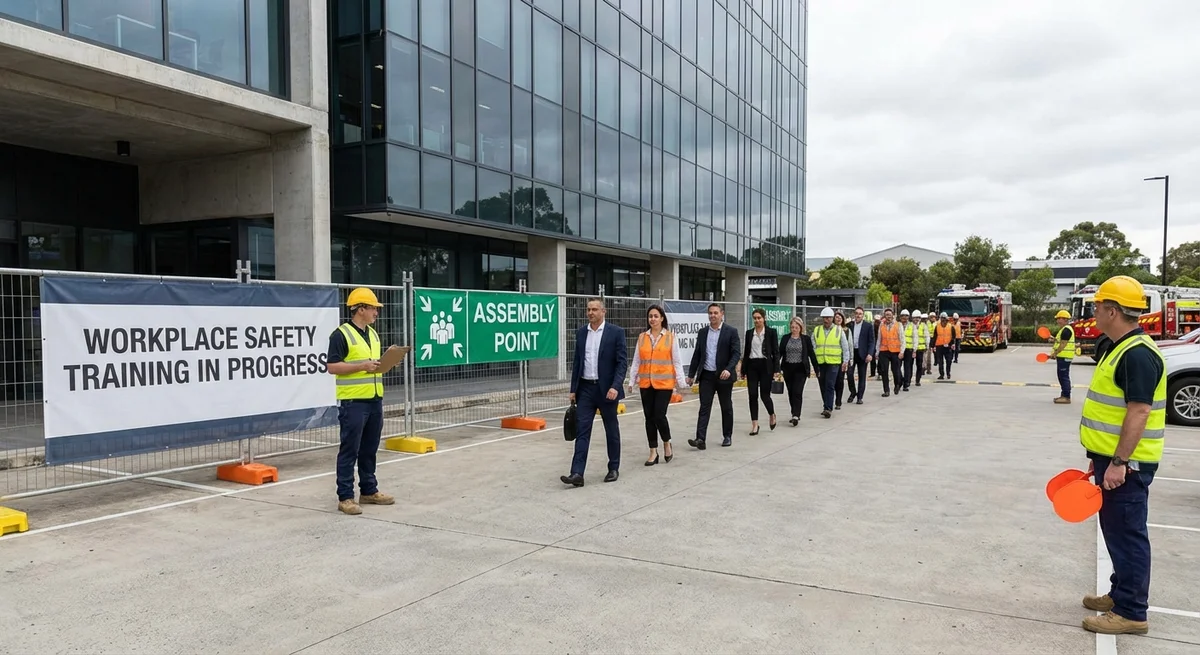
Exercise Execution: On the scheduled day, we activate your emergency procedures. The alarm sounds, wardens respond, and your team evacuates. Our observers monitor performance throughout the building.
Observation and Documentation: Trainers can observe from key locations: exits, stairwells, assembly points, and the warden control point. They document timing, identify issues, and note exemplary performance.
Immediate Debrief: Immediately following the exercise, we gather wardens for a hot debrief. What went well? What problems arose? What questions emerged? This immediate discussion captures insights while memories are fresh.
Written Report: We provide a comprehensive written report documenting:
- Exercise timeline and participation
- Observed strengths and areas for improvement
- Specific recommendations for plan revisions
- Training needs identified
- Compliance documentation for your records
Exercise Types
Announced Exercises: Participants know an exercise will occur, allowing preparation and scheduling of observers. Ideal for initial exercises or when testing specific procedures.
Unannounced Exercises: Participants do not know when the exercise will occur, testing realistic response capability. Recommended after your team has successfully completed announced exercises.
Partial Exercises: Testing specific components—such as warden communication or assembly point procedures—without full building evacuation. Useful for addressing specific identified weaknesses.
Full Evacuation Exercises: Complete activation of all emergency procedures with full building evacuation. Provides the most comprehensive test of your emergency capability.
Scenario-Based Exercises: Exercises incorporating specific scenarios such as blocked exits, missing persons, or mobility-impaired evacuees. Tests adaptive response capability.
Timing and Frequency
Australian Standards recommend evacuation exercises at least annually, with more frequent exercises for higher-risk occupancies. We help you determine appropriate frequency based on:
- Your regulatory requirements
- Staff turnover and the need to familiarise new employees
- Previous exercise results and identified improvement needs
- Building complexity and occupancy characteristics
Why Choose Messana Group
Experienced Facilitators: Our team has facilitated hundreds of evacuation exercises across every building type and industry sector. We know what to look for and how to extract maximum value from each exercise.
Constructive Approach: We focus on improvement, not criticism. Our reports highlight strengths alongside areas for development, encouraging continued engagement with emergency preparedness.
Integrated Services: Evacuation exercises integrate with our Emergency Management Planning, warden training, and compliance management services. We can address identified weaknesses through additional training or plan revisions.
Flexible Scheduling: We work around your operational requirements to minimise business disruption while ensuring meaningful exercise participation.
Ready to get started?
Contact us to discuss your requirements or schedule training for your team.