What Does a Fire Warden Actually Do? A Complete Role Guide
A comprehensive guide to fire warden responsibilities before, during, and after emergencies. Understand the legal basis and common questions new wardens have.
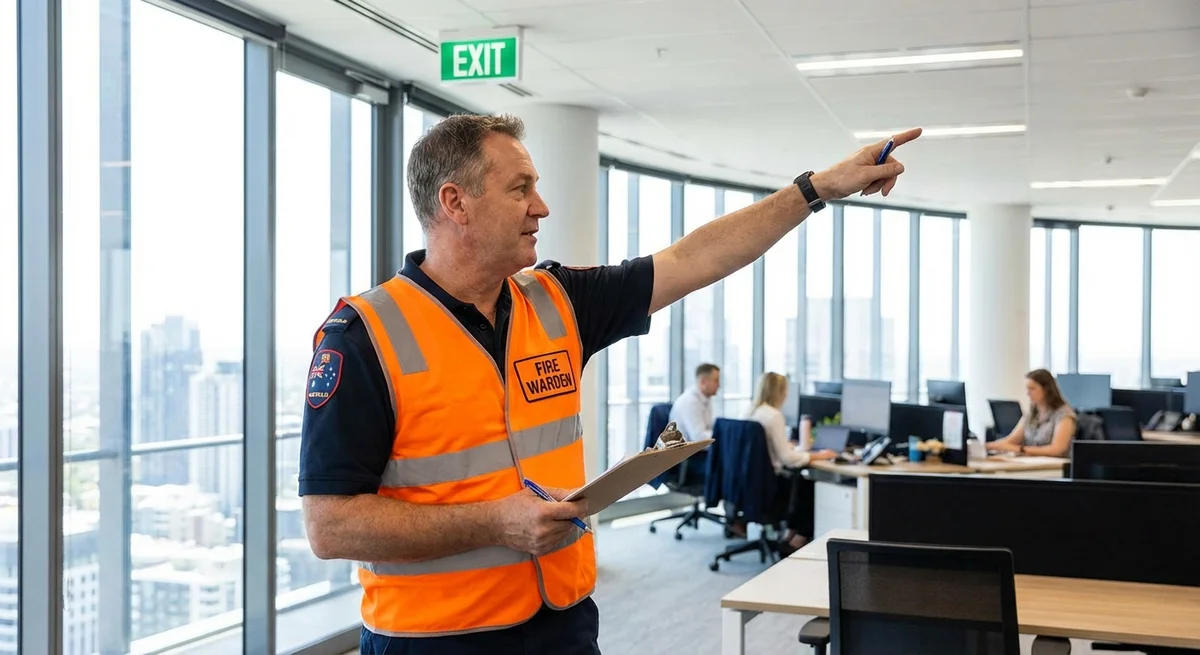
The Fire Warden Role Explained
Fire wardens—also known as floor wardens, area wardens, or evacuation wardens—are the backbone of any workplace emergency response. When the alarm sounds, these trained volunteers become responsible for guiding their colleagues to safety.
But the fire warden role extends far beyond the moments of an actual emergency. Understanding the full scope of warden responsibilities helps both new wardens and the organisations that rely on them.
Pre-Emergency Responsibilities
The most effective fire wardens are active long before any emergency occurs. Their day-to-day vigilance helps prevent incidents and ensures readiness when they’re needed.
Area Familiarisation
Fire wardens should have detailed knowledge of their designated area, including:
- Exit locations: All exits, both primary and secondary, within their area of responsibility
- Fire equipment locations: Fire extinguishers, fire blankets, hose reels, and manual call points
- Hazards: Areas of particular risk, such as kitchens, electrical rooms, or chemical storage
- Occupants: Awareness of who typically works in their area, including visitors and contractors
- Mobility considerations: Knowledge of any staff requiring assistance during evacuation
This knowledge develops through regular walkthroughs and staying alert to changes in the workplace.
Equipment Checks
While formal equipment testing is typically handled by maintenance contractors, wardens should conduct regular visual inspections. Are fire extinguishers present and properly mounted? Are exit signs illuminated and visible? Are emergency exits clear and unobstructed? Is safety equipment accessible?
Wardens who notice problems should report them immediately through appropriate channels.
Hazard Awareness and Reporting
Fire wardens develop an eye for potential hazards: extension leads running across walkways, combustible materials stored inappropriately, exit doors propped open or blocked, overloaded power points, and damaged electrical equipment.
Part of the warden role is championing safety by reporting hazards and, where appropriate, addressing minor issues directly.
Maintaining Training Currency
Effective wardens keep their skills current through attending annual fire warden training refreshers, participating in evacuation exercises, staying informed about changes to emergency procedures, and practising communication protocols.
During-Emergency Duties
When an emergency occurs, fire wardens shift into active response mode. Their actions in these critical minutes can save lives.
Initial Response
Upon hearing an alarm or becoming aware of an emergency:
- Remain calm: Your composure reassures others
- Assess the situation: Is it safe to proceed with evacuation?
- Don your identification: Put on your warden vest or helmet if available
- Begin evacuation procedures: Direct occupants to exits
Area Sweeps
A core warden responsibility is ensuring their area is clear. Systematically check all spaces including toilets, meeting rooms, and storage areas. Look for anyone who may not have heard the alarm. Assist anyone who needs help evacuating. Check that doors are closed behind evacuees to limit fire spread.
The sweep must be thorough but efficient—wardens shouldn’t linger in danger zones.
Guiding Evacuation
During evacuation, wardens direct occupants to the nearest safe exit, redirect people away from hazards or blocked exits, maintain calm and order, prevent people from using lifts, and assist mobility-impaired persons or trigger Personal Emergency Evacuation Plans (PEEPs).
Reporting to Chief Warden
Once their area is cleared, fire wardens report to the Chief Warden with confirmation that their area is clear (or details of anyone unaccounted for), any hazards observed, status of mobility-impaired persons, and any injuries or incidents during evacuation.
Clear, structured reporting enables the Chief Warden to coordinate the overall response and communicate effectively with emergency services.
Post-Emergency Responsibilities
The warden role doesn’t end when the alarm stops.
Accountability at Assembly Points
At the assembly point, wardens help with keeping evacuees together and away from danger, assisting with headcounts or roll calls, preventing premature re-entry, and identifying anyone who may need first aid or support.
Participating in Debriefs
After any evacuation—whether real or an exercise—wardens should participate in debriefing. What went well during the evacuation? What problems were encountered? Were there any near-misses or injuries? What could be improved for next time?
This feedback is essential for continuous improvement of emergency procedures.
Legal Basis: Where Warden Responsibilities Come From
Understanding the legal framework helps wardens appreciate the importance of their role.
Work Health and Safety Legislation
Australian WHS laws require employers to ensure, so far as reasonably practicable, the health and safety of workers. This includes providing safe systems of work, maintaining safe premises, and ensuring workers have adequate information and training.
Emergency preparedness, including trained wardens, is part of meeting these obligations.
Australian Standard AS 3745
The Australian Standard for Emergency Management Planning in facilities (AS 3745) provides the framework for Emergency Control Organisations. It establishes the roles within an ECO (Chief Warden, Deputy Chief Warden, Area/Floor Wardens), training requirements for each role, and exercise and review requirements.
Fire wardens aren’t just volunteers helping out—they’re a key part of how your employer meets its legal safety obligations.
Common Questions New Wardens Have
”What if I’m not there when an emergency happens?”
Warden coverage should be designed with redundancy. If you’re absent, your area should have backup coverage through multiple wardens per area, deputy warden arrangements, and cross-trained staff who can step in.
”What if someone refuses to evacuate?”
Stay calm and explain clearly that evacuation is required. If they still refuse, don’t physically force them, note their location, report their refusal to the Chief Warden, and let emergency services handle it if necessary.
”Am I expected to fight fires?”
Generally, no. Warden priority is evacuation, not firefighting. Fire extinguisher use is appropriate only when the fire is small and contained, you have a clear escape route, you’re trained in extinguisher use, and you feel confident it’s safe to attempt.
Consider our fire extinguisher training if you want to develop this capability.
”What if I panic?”
Training exists precisely for this reason. The more you practise through evacuation exercises and training scenarios, the more your emergency response becomes automatic. You don’t need to be perfect—you just need to act.
How Messana Group Can Help
With over 25 years of experience training fire wardens across Australia, Messana Group provides:
- Fire warden training delivered on-site at your workplace or at our training facilities
- Chief warden training for those stepping into leadership roles
- Evacuation exercises that give wardens practical experience
- Fire extinguisher training for wardens who want firefighting capability
Next Steps
Give your wardens the confidence they need to protect your workplace. Enquire about fire warden training with Messana Group or call 1300 622 030 to discuss your requirements.
Related Services
Need Help With Emergency Management?
Contact us for a free compliance assessment and discover how we can help your organisation.