Understanding AS 3745: The Australian Standard for Emergency Planning in Facilities
Complete guide to AS 3745 requirements for Emergency Management Planning. Understand ECO structure, training, exercises, and practical steps for compliance.
What is AS 3745 and Why Does It Matter?
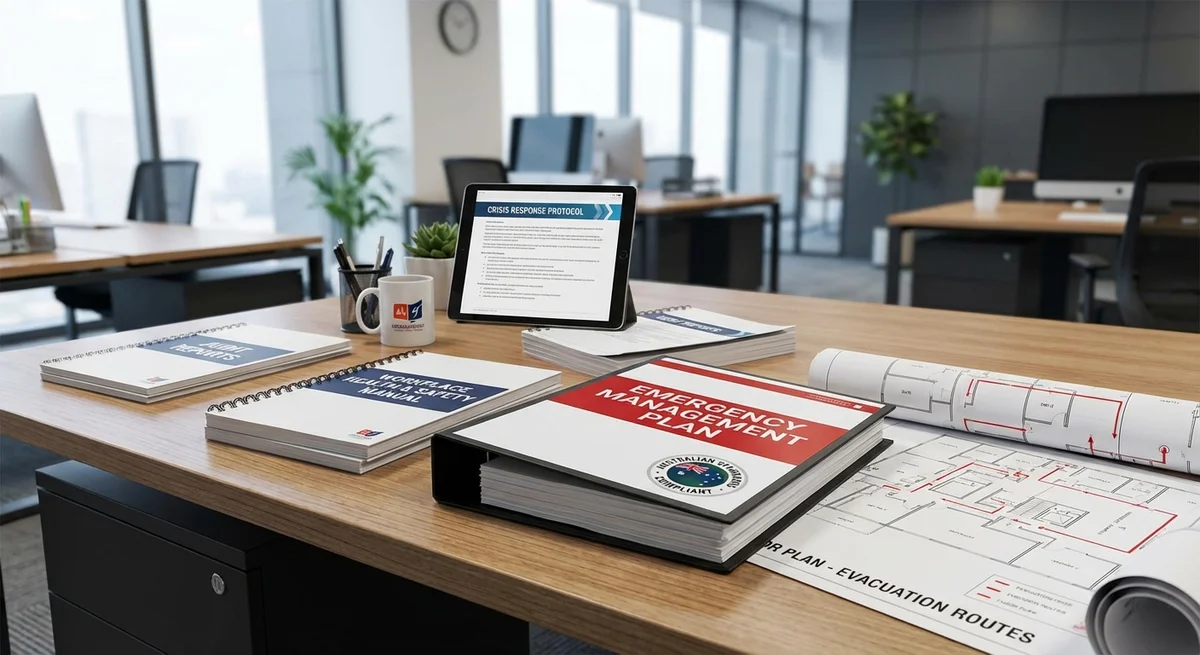
AS 3745 (Planning for emergencies in facilities) is the Australian Standard that provides the framework for Emergency Management Planning in buildings and facilities. While not legislation itself, AS 3745 is referenced by Work Health and Safety regulations and building codes, making compliance effectively mandatory for most Australian workplaces.
Understanding AS 3745 helps you meet your legal obligations, protect your people, and demonstrate due diligence in emergency preparedness.
Key Requirements of the Standard
Emergency Control Organisation (ECO)
AS 3745 establishes the ECO as the structure for managing emergencies. The ECO includes:
- Chief Warden: Overall command during emergencies
- Deputy Chief Warden: Supports and substitutes for Chief Warden
- Communications Officer: Manages internal and external communications
- Floor/Area Wardens: Responsible for specific zones
- First Aid Officers: Medical response during emergencies
The size and complexity of your ECO depends on your facility. A small office might have a Chief Warden and one or two Area Wardens, while a large multi-tenancy building needs a comprehensive structure. Our chief warden training and fire warden training develop the competencies required.
Emergency Plans
Your Emergency Management Plans must include:
- Emergency response procedures for identified risks
- Evacuation procedures and routes
- Shelter-in-place procedures where applicable
- ECO structure and responsibilities
- Communication procedures
- Recovery procedures
Plans must be site-specific—generic templates don’t meet AS 3745 requirements.
Training Requirements
AS 3745 requires ECO members to be trained in their responsibilities. Training should cover the emergency plan and procedures, individual role responsibilities, communication protocols, equipment operation, and practical skills for their role.
Training should be refreshed when procedures change significantly and at intervals appropriate to maintain competency (typically annually).
Evacuation Exercises
The standard requires evacuation exercises at intervals not exceeding 12 months. Exercises should test evacuation procedures and ECO response, be documented with outcomes recorded, include debriefs to identify improvements, and involve all occupants where practicable.
More frequent exercises are recommended for new facilities, after significant changes, or where performance indicates the need. Our evacuation exercises service provides professional facilitation.
Emergency Equipment and Signage
AS 3745 requirements include evacuation diagrams displayed at required locations, emergency warning systems appropriate to the facility, emergency lighting and exit signage compliant with relevant standards, and fire safety equipment maintained to required standards.
Who Needs to Comply with AS 3745?
Building Owners and Managers
Building owners have primary responsibility for Emergency Management Planning in common areas and building-wide systems. They typically establish the overall emergency framework and Building Emergency Planning Committee (BEPC) for multi-tenancy buildings.
Tenants and Occupiers
Each tenant or occupier is responsible for Emergency Management Planning within their tenancy. This must integrate with building-level plans where applicable.
Employers
Under WHS legislation, employers must ensure emergency preparedness for their workers. This includes implementing AS 3745 requirements for areas under their control.
How AS 3745 Interacts with WHS Legislation
The Regulatory Framework
WHS legislation creates the legal duty to prepare for emergencies. AS 3745 provides the recognised method for meeting that duty. Together they create a compliance framework where WHS laws require emergency preparedness, AS 3745 defines what good practice looks like, and regulators and courts look to AS 3745 when assessing compliance.
Due Diligence
Following AS 3745 helps demonstrate due diligence in emergency preparedness. Conversely, failing to follow the standard may be seen as failing to meet your duty of care.
Common Compliance Gaps We See
Gap 1: Outdated Emergency Plans
Plans that haven’t been reviewed after workplace changes, staff turnover, or procedure updates don’t reflect current reality.
Gap 2: Untrained or Insufficient Wardens
Warden teams with lapsed training or insufficient numbers to provide coverage compromise evacuation capability.
Gap 3: Missing or Incorrect Evacuation Diagrams
Diagrams that don’t reflect current layouts, missing from required locations, or not meeting AS ISO 7010 requirements.
Gap 4: No Recent Evacuation Exercises
Facilities that haven’t conducted documented evacuation exercises within the required 12-month period.
Gap 5: Poor Documentation
Missing training records, undocumented exercises, or incomplete Emergency Management Plans make compliance difficult to demonstrate.
Our compliance administration service helps identify and address these gaps.
Practical Steps to Achieve Compliance
Step 1: Gap Assessment
Assess your current state against AS 3745 requirements. Identify what’s in place, what’s missing, and what needs updating.
Step 2: Plan Development or Update
Ensure your Emergency Management Plans are current, site-specific, and meet all AS 3745 content requirements.
Step 3: ECO Establishment
Establish or review your ECO structure. Ensure adequate warden coverage and clear role assignments.
Step 4: Training
Provide appropriate training for all ECO members. Our fire warden training and chief warden training meet AS 3745 requirements.
Step 5: Equipment and Signage
Review evacuation signage and emergency equipment. Address any deficiencies.
Step 6: Exercise and Review
Conduct evacuation exercises and establish a cycle of review and improvement.
How Messana Group Can Help
With over 25 years of experience helping Australian workplaces achieve AS 3745 compliance, Messana Group provides:
- Compliance assessments to identify gaps and priorities
- Emergency plan development meeting all AS 3745 requirements
- Warden training programs for all ECO roles
- Evacuation diagrams meeting Australian Standards
- Evacuation exercises with professional facilitation
- Ongoing compliance administration to maintain readiness
Next Steps
Request a compliance assessment to identify any gaps in your AS 3745 implementation. Contact Messana Group or call 1300 622 030 to discuss your requirements.
Related Services
Need Help With Emergency Management?
Contact us for a free compliance assessment and discover how we can help your organisation.