Why In-Person Emergency Training Delivers Better Results
Online training might seem convenient, but emergency response requires hands-on skills that only in-person training can develop. Here's why we believe the trainer needs to be on-site.
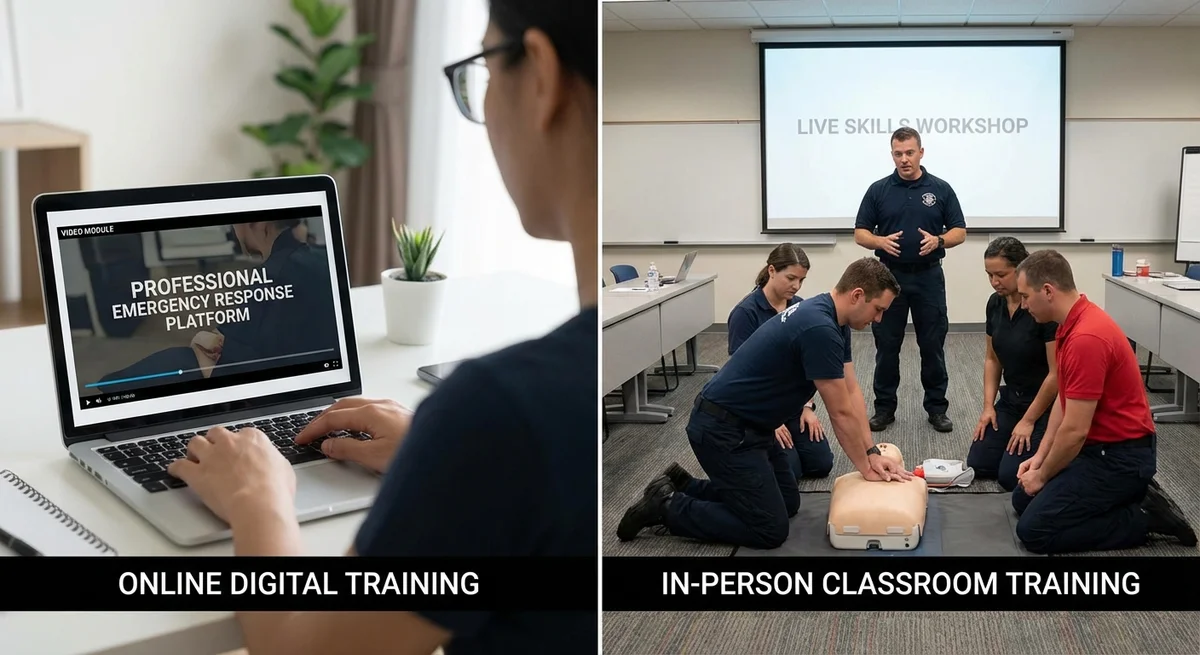
The Case for On-Site Training
When it comes to emergency management training, we firmly believe the trainer needs to be on-site. While online training might seem like a convenient shortcut, emergency response is fundamentally a practical skill that requires hands-on learning, real-time feedback, and facility-specific knowledge that no video or online module can replicate.
Why Online Training Falls Short
You Cannot Practice Evacuation Through a Screen
Emergency response is physical. Wardens need to practice clearing rooms, guiding occupants to exits, assisting people with mobility limitations, and coordinating with other team members. These skills require actual movement through real spaces—your building’s corridors, stairwells, and assembly points.
An online module can explain the theory of area sweeps. Only in-person training lets participants actually perform one, receive immediate correction on their technique, and develop the muscle memory needed to execute under pressure.
Every Building is Different
Generic online content cannot address your specific facility. Where are your fire panels? What are your building’s unique hazards? Which exit routes work best for different scenarios? How do your communication systems operate?
When our trainers come to your site, they work within your actual environment. They can point to your specific exits, demonstrate your fire equipment, and address the real challenges your wardens will face. This contextual learning is far more valuable than abstract principles delivered through a screen.
Emergency Response Requires Human Judgment
Emergencies are unpredictable. Effective wardens need to make rapid decisions based on changing circumstances. This adaptive thinking develops through scenario-based exercises where trainers can introduce complications, challenge assumptions, and guide participants through realistic decision-making.
Online training delivers standardised content. In-person training develops the judgment and confidence that cannot be scripted.
Engagement and Retention
Adults learn best through active participation and discussion. In-person training allows for questions, clarification, and the kind of interactive learning that cements understanding. Participants can share their own experiences and concerns, and trainers can address specific situations relevant to that workplace.
Studies consistently show that passive consumption of online content results in poor retention compared to active, facilitated learning experiences.
What Effective Training Looks Like
Trainer Expertise On-Site
Our trainers bring years of emergency management experience directly to your workplace. They assess your facility, identify potential challenges, and tailor the training to your specific circumstances. This expertise cannot be delivered through a pre-recorded video.
Practical Exercises
Fire warden training includes hands-on practice with evacuation procedures, communication protocols, and area sweep techniques. Participants learn by doing, not just watching.
Fire extinguisher training requires actual use of extinguishers on controlled fires. No online simulation can replicate the experience of handling real equipment in realistic conditions.
Immediate Feedback
When a participant makes an error during in-person training, the trainer corrects it immediately. This real-time feedback accelerates learning and prevents bad habits from forming. Online training has no mechanism for this essential correction.
Team Building
Emergency response is a team effort. In-person training allows your wardens to work together, understand each other’s roles, and build the coordination that effective emergency response requires. This team development happens naturally during group exercises and cannot be replicated by individuals completing online modules in isolation.
The Real Cost of Inadequate Training
Choosing online training because it appears cheaper or more convenient is a false economy. When an emergency occurs, undertrained wardens:
- Hesitate when decisive action is needed
- Make errors that could endanger occupants
- Fail to coordinate effectively with each other
- Struggle to adapt when situations do not match expected scenarios
The cost of a poorly managed emergency—in potential injuries, property damage, and organisational liability—far exceeds any savings from cutting corners on training.
Who Needs Training?
Chief Wardens
Chief Warden training is essential for those taking overall command during emergencies. Chief Wardens need advanced skills in decision-making and command, coordination and communication, emergency services liaison, and incident management. These leadership skills require interactive development that online delivery cannot provide.
Fire Wardens
Fire Warden training prepares area and floor wardens for their on-ground response role. This includes area evacuation procedures, sweep techniques, occupant assistance, and reporting protocols. Every one of these skills benefits from hands-on practice.
All Staff
While not all staff need warden training, everyone should understand basic emergency procedures through proper induction training delivered by qualified trainers who can answer questions and address concerns.
Training Frequency
Initial Training
New wardens should complete comprehensive in-person training before assuming their role. This establishes the foundation of knowledge and practical skills they need.
Refresher Training
Annual refresher training for all wardens maintains skills and addresses any procedural changes. Face-to-face refreshers also allow trainers to assess whether skills have degraded and provide targeted reinforcement.
Evacuation Exercises
Regular evacuation exercises provide practical application of training in realistic conditions. These exercises validate that training has been effective and identify any gaps requiring attention.
How Messana Group Delivers
With over 25 years of experience delivering emergency management training across Australia, we bring professional trainers to your workplace. Our approach includes:
- On-site delivery at your facility, working with your specific environment
- Experienced trainers with real emergency management backgrounds
- Practical exercises that develop genuine capability
- Customised content tailored to your building and risks
- Comprehensive documentation supporting compliance requirements
Next Steps
Invest in training that actually works. Book in-person training with Messana Group or call 1300 622 030 to discuss your requirements.
Your people deserve training that prepares them for real emergencies—and that means having a professional trainer on-site.
Related Services
Need Help With Emergency Management?
Contact us for a free compliance assessment and discover how we can help your organisation.