How to Create an Emergency Evacuation Plan: Step-by-Step Guide
Follow this step-by-step guide to create an effective emergency evacuation plan. Cover risk assessment, procedures, warden roles, and testing requirements.
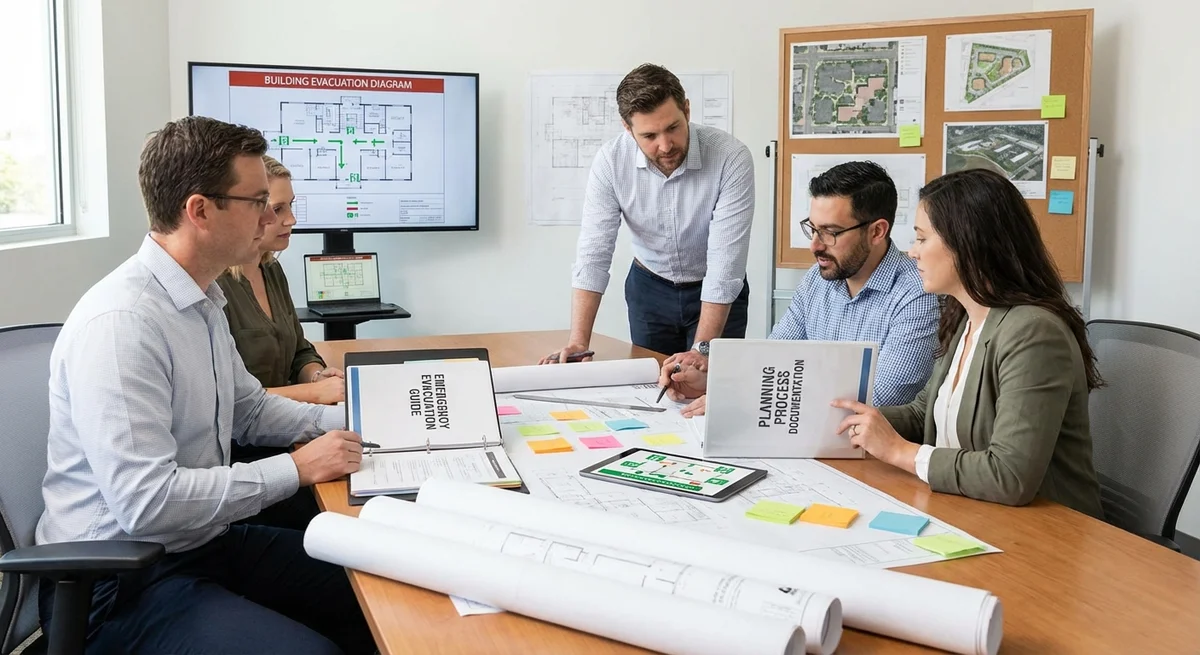
A Practical Guide
How to Create an Emergency Evacuation Plan: Step-by-Step Guide provides practical guidance you can implement in your workplace. This guide walks you through the key steps and considerations.
Understanding the Fundamentals
Why This Matters
Getting this right protects your people and helps meet your legal obligations under Work Health and Safety legislation. The Australian Standard AS 3745 provides the framework, but practical implementation requires understanding your specific situation.
Key Principles
Effective implementation follows several key principles: it should be specific to your facility and risks, practical and able to be followed under stress, aligned with broader Emergency Management Plans, supported by training and practice, and regularly reviewed and improved.
Step-by-Step Implementation
Step 1: Assessment
Begin by understanding your current situation. What do you already have in place? What are the gaps? What are your specific risks and challenges?
A thorough assessment provides the foundation for effective implementation.
Step 2: Planning
Based on your assessment, develop or update your approach. This should address all identified gaps and risks, be documented clearly, assign responsibilities, and set realistic timelines.
Step 3: Communication
Ensure everyone who needs to know is informed. This includes wardens and ECO members, general staff, building management, contractors and visitors, and emergency services if relevant.
Step 4: Training
Effective implementation requires trained people. Depending on the topic, this might include fire warden training, chief warden training, staff awareness sessions, or practical skills training.
Step 5: Testing
Test your implementation through evacuation exercises, desktop walkthroughs, practical demonstrations, and scenario discussions.
Step 6: Review and Improvement
Use testing results to identify improvements. Implementation is never “finished”—continuous improvement maintains and builds capability.
Common Challenges and Solutions
Challenge: Getting Started
Implementation can feel overwhelming. Start with the highest priority areas and build from there.
Challenge: Resource Constraints
Limited time, budget, and people are common constraints. Prioritise based on risk and compliance requirements.
Challenge: Maintaining Momentum
Initial enthusiasm can fade. Build ongoing activities into normal operations through compliance administration systems.
Challenge: Measuring Success
How do you know if implementation is effective? Use exercise performance, compliance measures, and incident outcomes to assess effectiveness.
Best Practices
Do’s
- Make it specific to your workplace
- Involve people who will implement and use it
- Test through exercises and drills
- Document thoroughly
- Review and update regularly
Don’ts
- Copy generic templates without customisation
- Assume everyone knows what to do without training
- Set and forget without ongoing review
- Ignore feedback from exercises and incidents
- Wait for an incident to reveal problems
Documentation Requirements
What to Document
Effective implementation requires documentation of plans and procedures, training delivered and competencies achieved, exercises conducted and outcomes, equipment maintenance and testing, and review dates and changes made.
Maintaining Records
Keep records organised and accessible, up to date, available for audits and reviews, and backed up securely.
Good documentation demonstrates compliance and supports continuous improvement.
Integration with Broader Systems
Emergency Management Framework
This implementation should integrate with your overall Emergency Management Plans, building management systems, WHS management system, and business continuity arrangements.
Organisational Processes
Consider integration with induction processes, change management procedures, training calendars, and review cycles.
When to Seek Professional Help
DIY vs Professional Support
Some implementation can be managed internally, but professional support may be valuable when you lack internal expertise, compliance requirements are complex, you need independent assessment, or you want to build capability quickly.
What Professionals Provide
Professional support can include expert knowledge and experience, objective assessment, efficient implementation, training delivery, and ongoing support.
How Messana Group Can Help
With over 25 years of experience, we provide practical support for implementation including:
- Emergency Plans, Evacuation Exercises delivered professionally
- Emergency plan development tailored to your facility
- Training programs building capability at all levels
- Evacuation exercises testing implementation
- Compliance administration maintaining ongoing effectiveness
Next Steps
Implement effectively with professional support. Contact Messana Group or call 1300 622 030 to discuss your requirements.
Related Services
Need Help With Emergency Management?
Contact us for a free compliance assessment and discover how we can help your organisation.