Fire Warden Training in Victoria: Meeting Your OHS Act Obligations
Understand your OHS Act obligations for fire warden training in Victoria. Learn what's required, how to build capable emergency response teams, and meet compliance.
Introduction
Fire Warden Training in Victoria: Meeting Your OHS Act Obligations is essential knowledge for anyone involved in workplace emergency management. This comprehensive guide covers everything you need to know to build effective emergency response capability in your organisation.
Our Victoria team delivers training tailored to local requirements.
Why Training Matters
Effective emergency response doesn’t happen by accident. It requires trained personnel who understand their roles and can execute procedures under pressure. The Australian Standard AS 3745 recognises this by requiring ECO members to be trained in their responsibilities.
Beyond compliance, training builds confidence. Wardens who have practised scenarios and understand procedures respond more effectively during real emergencies. This translates directly to better outcomes for the people they’re protecting.
Core Training Components
Understanding Your Role
Every emergency response role has specific responsibilities before, during, and after emergencies. Training must cover all three phases to be effective.
Before emergencies, wardens maintain awareness of their areas, conduct equipment checks, and stay current with procedures. Our fire warden training covers these proactive responsibilities.
During emergencies, wardens execute evacuation procedures, conduct sweeps, assist occupants, and report to the Chief Warden. This requires practised skills and clear procedures.
After emergencies, wardens participate in accountability, debriefs, and documentation. These activities drive continuous improvement.
Practical Skills Development
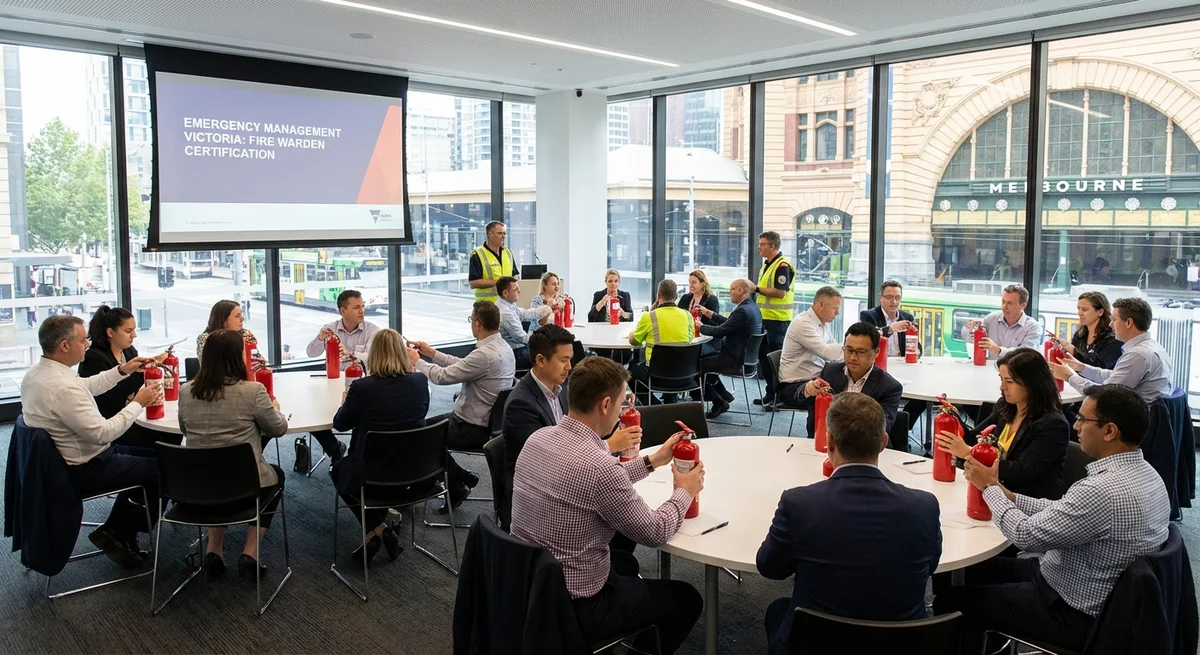
Effective training goes beyond theory. Practical components should include area sweep techniques and systematic checking, communication protocols and reporting, equipment familiarisation (fire extinguishers, evacuation equipment), working with mobility-impaired occupants, and decision-making under pressure.
Our training programs include hands-on exercises that develop these skills.
Scenario-Based Learning
Real emergencies don’t follow scripts. Training should include scenario-based exercises that challenge participants to apply their knowledge to realistic situations. This builds the adaptive thinking needed when actual emergencies don’t match expectations.
Who Needs Training?
Chief Wardens
Chief Warden training is essential for those taking overall command during emergencies. Chief Wardens need advanced skills in decision-making and command, coordination and communication, emergency services liaison, and incident management.
Fire Wardens
Fire Warden training prepares area and floor wardens for their on-ground response role. This includes area evacuation procedures, sweep techniques, occupant assistance, and reporting protocols.
All Staff
While not all staff need warden training, everyone should understand basic emergency procedures, their nearest exits and assembly points, how to respond to alarms, and who their wardens are.
Proper induction training delivered by qualified trainers ensures all staff understand emergency procedures.
Training Frequency and Currency
Initial Training
New wardens should complete comprehensive training before assuming their role. This establishes the foundation of knowledge and skills they need.
Refresher Training
AS 3745 doesn’t specify exact refresher intervals, but industry best practice suggests annual refresher training for all wardens. More frequent training may be needed when procedures change significantly, after poor performance in exercises, or for high-risk or complex facilities.
Maintaining Currency
Between formal training, currency can be maintained through participation in evacuation exercises, attendance at toolbox talks and briefings, self-directed review of procedures, and mentoring by experienced wardens.
Measuring Training Effectiveness
Competency Assessment
Training should include assessment of competency, not just attendance. This might include practical demonstrations of key skills, scenario-based problem-solving, and written or verbal knowledge checks.
Exercise Performance
Evacuation exercises provide real-world assessment of training effectiveness. If exercises reveal gaps in warden performance, additional training is needed.
Continuous Improvement
Track training outcomes over time. Are exercise times improving? Are debriefs identifying fewer issues? Is warden confidence increasing? These indicators show whether training is achieving its goals.
Common Training Challenges
Challenge: Time Constraints
Wardens are volunteers with other responsibilities. Training must be efficient and respectful of their time while still being comprehensive.
Solution: We design training programs that maximise value within practical time constraints, typically half-day sessions that cover essential content without unnecessary padding.
Challenge: Engagement
Adults learn best when engaged and seeing relevance. Dry, lecture-based training fails to build lasting capability.
Solution: Our training is interactive and scenario-based, with activities that challenge participants and make learning memorable.
Challenge: Turnover
Staff turnover means continuous training needs. Training only once creates gaps as wardens leave.
Solution: Establish a regular training cycle and track warden currency through compliance administration systems.
How Messana Group Can Help
With over 25 years of experience delivering emergency management training across Australia, we offer:
- Fire Warden Training, Compliance Administration delivered at your workplace or our facilities
- Customised programs tailored to your specific facility and risks
- Experienced trainers with real emergency management backgrounds
- Practical, engaging delivery that builds genuine capability
- Documentation and records supporting compliance requirements
Our Victoria team delivers training tailored to local requirements.
Next Steps
Build your emergency response capability with professional training. Book training with Messana Group or call 1300 622 030 to discuss your requirements.
Related Services
Need Help With Emergency Management?
Contact us for a free compliance assessment and discover how we can help your organisation.