Emergency Evacuation Signs and Diagrams: Requirements and Best Practices
Learn about Australian requirements for emergency evacuation signs and diagrams under AS 3745, including placement, content, and compliance best practices.
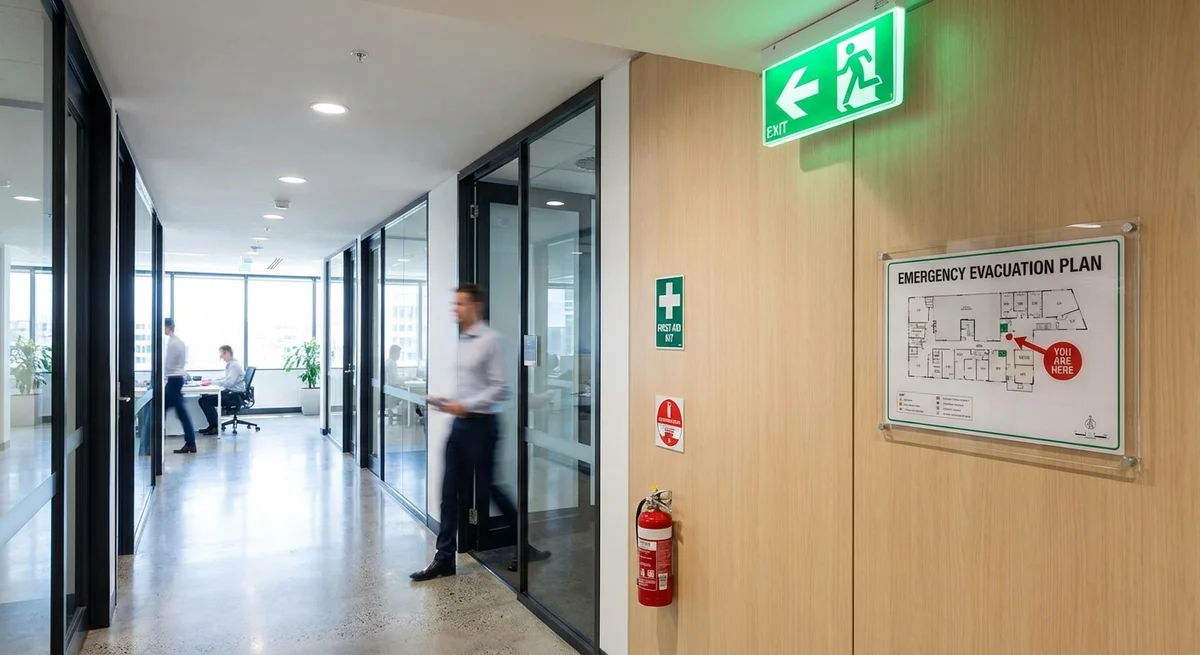
Understanding Your Compliance Obligations
Emergency Evacuation Signs and Diagrams: Requirements and Best Practices is critical for Australian workplaces. This guide helps you understand requirements and implement effective compliance measures.
The Regulatory Framework
Work Health and Safety Legislation
Australian WHS laws create a duty on employers to ensure, so far as reasonably practicable, the health and safety of workers. This includes having Emergency Management Plans and procedures appropriate to your workplace risks.
The specific requirements are found in WHS Regulations, which typically reference Australian Standards for detailed guidance on how to meet the duty.
Australian Standard AS 3745
AS 3745 (Planning for emergencies in facilities) provides the framework for emergency management compliance. While technically a voluntary standard, it’s referenced by regulations and represents the benchmark for good practice.
Key AS 3745 requirements include documented Emergency Management Plans appropriate to your facility, an established Emergency Control Organisation (ECO) with trained wardens, evacuation diagrams displayed at required locations, regular evacuation exercises, and annual plan review.
Key Compliance Requirements
Emergency Plans
Your emergency plan must be specific to your facility, not a generic template. It should address the actual risks and characteristics of your workplace, including building layout and exit routes, occupancy patterns and characteristics, specific hazards present, and after-hours arrangements.
Warden Training
ECO members must be trained in their responsibilities. This includes Chief Warden training for those in command roles and Fire Warden training for area and floor wardens.
Training should be refreshed regularly—industry best practice suggests annually.
Evacuation Exercises
AS 3745 requires evacuation exercises at intervals not exceeding 12 months. Exercises should test your actual procedures, involve all occupants where practicable, be documented, and include debriefs.
Our evacuation exercises service provides professional facilitation.
Documentation
Compliance requires documentation including current Emergency Management Plans, training records for all ECO members, evacuation exercise records and reports, equipment maintenance logs, and plan review records.
Common Compliance Gaps
Gap 1: Outdated Plans
Emergency plans that haven’t been reviewed after changes to the workplace, staffing, or procedures. Plans should be living documents that reflect current reality.
Gap 2: Training Lapses
Wardens whose training has lapsed or who never received formal training. Every ECO member needs documented training appropriate to their role.
Gap 3: Missed Exercise Deadlines
Facilities that haven’t conducted a documented evacuation exercise within 12 months. This is a clear compliance failure.
Gap 4: Signage Issues
Evacuation diagrams that are outdated, incorrectly placed, or don’t meet Australian Standard requirements.
Gap 5: Poor Record Keeping
Inadequate documentation makes compliance impossible to demonstrate, even if you’re actually doing the right things.
Compliance Monitoring and Maintenance
Regular Reviews
Establish a cycle of regular compliance checks covering plan currency, training status, equipment maintenance, exercise scheduling, and documentation completeness.
Proactive Management
Don’t wait for audits or incidents to reveal gaps. Proactive compliance administration maintains readiness year-round.
Change Management
Any significant change should trigger a compliance review. This includes relocations or renovations, changes in occupancy or operations, staff turnover affecting the ECO, new equipment or hazards, and organisational restructures.
Working with Regulators
Inspections and Audits
WHS regulators may inspect your emergency arrangements. Being prepared means having documentation readily accessible, being able to explain your arrangements, demonstrating training currency, and showing evidence of exercises.
After Incidents
If an incident occurs, your emergency management will be scrutinised. Robust compliance provides both protection for people and evidence of due diligence.
Building a Compliance Culture
Leadership Commitment
Compliance isn’t just a safety team responsibility. It requires visible leadership commitment and adequate resourcing.
Staff Engagement
Emergency preparedness works best when all staff understand its importance and participate actively. Communication and engagement build a compliance culture.
Continuous Improvement
Move beyond minimum compliance to genuine capability improvement. Use exercises and incidents as learning opportunities.
How Messana Group Can Help
With over 25 years of helping Australian workplaces achieve and maintain compliance, we provide:
- Compliance assessments identifying gaps and priorities
- Evacuation Signs Diagrams, Emergency Plans meeting regulatory requirements
- Emergency plan development specific to your facility
- Ongoing compliance administration keeping you current year-round
Next Steps
Ensure your compliance with a professional assessment. Contact Messana Group or call 1300 622 030 to discuss your requirements.
Related Services
Need Help With Emergency Management?
Contact us for a free compliance assessment and discover how we can help your organisation.